
Practical LLM SEO strategies for 2026
Regain your marketing edge in the AI-first search world with these practical LLM SEO strategies for 2026 and beyond.
Admin
2/25/20262 min read
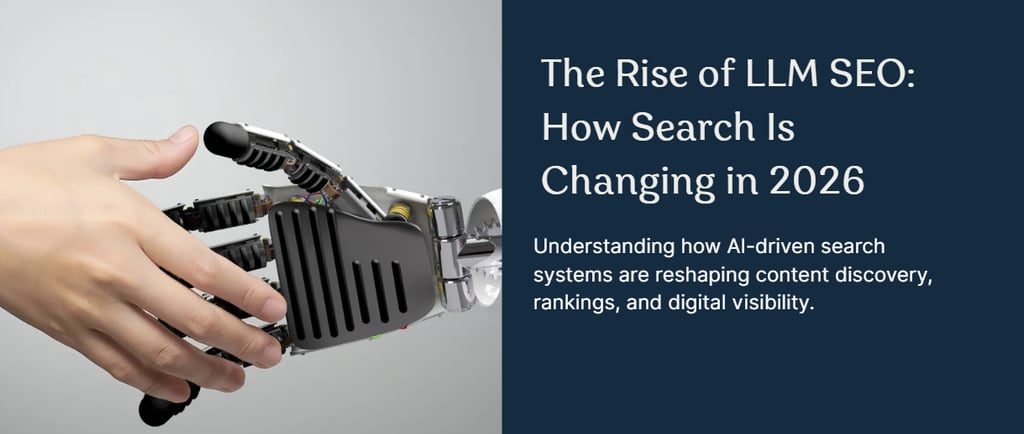
Practical LLM SEO strategies for 2026 focus on making your site the go-to source for AI models like ChatGPT, Perplexity, and Google AI Overviews by prioritizing parseability, authority, and prompt alignment over traditional keyword stuffing. These tactics help websites get cited or summarized in AI responses, driving indirect traffic as users trust AI-recommended sources
Why LLM SEO Matters in 2026
Why: Traditional SEO fails because LLMs pull from semantic understanding, not just rankings—80% of queries now seek conversational answers, reducing click-through to sites by 30-50%. LLMs favor structured, authoritative content that directly answers prompts, boosting visibility in AI outputs over Google SERPs.
How: Audit current content with tools like SurferSEO or Ahrefs for semantic gaps, then refactor using the strategies below.
When: Implement now for mid-2026 gains, as AI search share hits 40%+; refresh quarterly for freshness signals.
What: Measurable outcomes include 2-5x more AI citations (track via Google Alerts or SEMrush Position Tracking) and referral traffic from AI tools.
Align Content With Prompts
Why: Users query LLMs conversationally ("Recommend SEO experts in India for Shopify stores"), so mismatched keyword-optimized pages get ignored.
How: Analyze competitor AI responses and Google "People Also Ask"; rewrite intros as direct answers. Example: Transform "SEO Services India" page to answer "Best SEO for Indian e-commerce in 2026?"
When: On every new/existing page; test with Perplexity queries weekly.
What: Expect 20-40% uplift in AI mentions.
Structure for Retrieval
Why: LLMs parse hierarchies easily; scannable formats like lists/tables increase snippet extraction by 3x.
How: Use H2/H3 as exact questions (e.g., H2: "How does schema boost LLM visibility?"); limit paragraphs to 3-4 sentences; prioritize lists/tables.
When: During content creation/audit; validate with Google's Rich Results Test.
What: Higher "featured snippet" rates in AI outputs.
Schema & Entity Optimization
Why: Schema provides explicit signals for entities, helping LLMs link your site to Knowledge Graph concepts (e.g., "SEO Consultant" → your brand).
How: Add JSON-LD for FAQPage, HowTo, Organization; name-drop entities (Wikipedia-linked people/places); use tools like Schema App.
When: Site-wide via header scripts; update for new content.
What: 15-25% more entity recognition in AI responses.
Content Layering
Why: LLMs reward depth; pillar-cluster builds internal signals of authority, improving retrieval ranking.
How: Create 3k+ word pillar (e.g., "LLM SEO Guide 2026"); link 10-20 clusters (blogs/videos); use anchor text like "detailed FAQ here."
When: Quarterly pillar refreshes; monthly clusters.
What: Topical map scores >80 in tools like Frase.io.
Build Topical Authority
Why: LLMs cite domain experts; exhaustive coverage signals trustworthiness over single posts.
How: Map 50+ subtopics (glossary: "LLM Seeding = Pre-training injection"); interlink; guest on podcasts for backlinks.
When: Ongoing; aim for 1-2 posts/week in niche.
What: Domain authority via AI tools like Originality.ai scores.
Implement these in sequence: Start with audits (a/b), layer tech (c), then scale content (d/e) for compounding results.
AI Search Pivot Playbook
Join the Insider List
© 2026. All rights reserved AI Search Pivot Playbook